

District Project
This years DG's Project is UQ's Queensland Brain Institute where the aim is to improve lives through a deeper understanding of the brain in health and disease. We are asking all Rotarians, Clubs, and other community Orginizations and Individuals to consider this as a cause to donate towards. Click on link below.
 

Program Overview

The Rotary Reading Assistance Program continued to provide valuable support to participating families throughout the year, promoting early literacy and fostering a love of reading among young children.

At the commencement of the year, the program supported 73 children and their families. During January, 15 participants graduated from the program after reaching the age limit of six years. Throughout the year, new families joined the program as places became available. The year concluded with 56 active participants, representing a net reduction of only two families after normal program turnover. Since 1 July 2026, participant numbers have increased by eight, bringing total enrolment to 64 children.

Book Distribution

A key component of RRAP is providing quality reading materials directly to families. During the reporting year, 728 books were distributed to participating families, in addition to Christmas activity books which were gift wrapped and delivered as a special end-of-year gift. Since the commencement of the program, and excluding Christmas activity books, RRAP has distributed 11,790 books to children living in rural and remote communities.

The program has also supported other literacy-focused initiatives, providing approximately:

  • 100 books to the Royal Flying Doctor Service Midwifery Program

  • 50 books to Rotary Australia Repurposing Equipment (RARE) consisting of quality books that fell outside the RRAP age profile

Variety and Quality of Books

A key strength of the program is the wide variety of books supplied to families. During the year, children received books ranging from board books and early readers through to fiction, non-fiction, science, nature and literacy development titles.

Client Feedback – Parent and carer survey

A client survey was conducted during the year to evaluate participant satisfaction and identify opportunities for improvement. The results demonstrated overwhelming support for the program. All respondents indicated they would recommend RRAP to other rural and remote families. 

Parents reported improvements in:

  • Interest in books and reading

  • Desire to be read to

  • Attention during reading sessions

  • Confidence in choosing books

  • Recognition of letters and words

  • Early literacy development overall 

Most families rated their child's reading development as 4 or 5 out of 5, with the majority selecting the highest rating. The survey also highlighted the importance of the program in overcoming barriers faced by rural families, including distance from libraries, limited local access to books and the increasing cost of living. Parents frequently commented on the excitement their children experience when receiving books through the mail, the quality and variety of the reading materials provided, and the significant contribution the program makes to building home libraries. Many families reported reading with their children daily and noted that the program provides essential access to books that would otherwise be difficult or costly to obtain.

Some of the comments received included:

"The excitement my children have to get books in the mail and new books to read."

"The joy the kids have when they receive their own letter in the mail and the excitement that night to read together."

"The variety of age-appropriate books given."

"It has given our child a great interest in books and aided in her development."

The survey results confirm that RRAP continues to make a meaningful difference in the literacy development of children in rural and remote communities. The strong support expressed by participating families highlights the ongoing value of the program and its important role in fostering educational opportunities and a love of reading among young children.

Looking Forward

The continued participation of families and the positive survey feedback demonstrate the importance of RRAP in supporting early childhood literacy within our community. We look forward to building on the program's success in the coming year and continuing to help children develop the skills and confidence that form the foundation for lifelong learning.

As RRAP approaches the milestone of 12,000 books distributed, the program continues to demonstrate how access to quality books can make a lasting difference to literacy development, school readiness, and a lifelong love of reading.

Acknowledgements

The continued success of the Rotary Reading Assistance Program would not be possible without the dedication and generosity of Rotary members and supporting clubs.

We extend our sincere thanks to the members of the Rotary Club of Sumner Park for their ongoing hands-on involvement in sourcing, sorting, packing and distributing books, coordinating participant records, and ensuring that quality reading materials reach children and families throughout rural and remote communities. Their commitment and enthusiasm are the foundation upon which the program operates.

We also gratefully acknowledge the Rotary Clubs that have provided financial support, book donations, sponsorship and encouragement during the past twelve months. Their contributions have enabled RRAP to continue delivering books to children who may otherwise have limited access to reading materials and have helped the program move closer to the significant milestone of 12,000 books distributed.

Together, Rotary members across our District are helping to foster early literacy, strengthen family reading habits, and create opportunities for children to develop a lifelong love of books and learning. The Rotary Reading Assistance Program continues to demonstrate Rotary's commitment to supporting literacy, education and opportunity for children living in rural and remote communities across District 9620.

Thank you for your continued support of this important Rotary initiative.

PP Michelle McDowall, Chair

Rotary Reading Assistance Program

Rotary District 9620

WRCC Donates Filing Cabinet to UCB PNG Laif FM


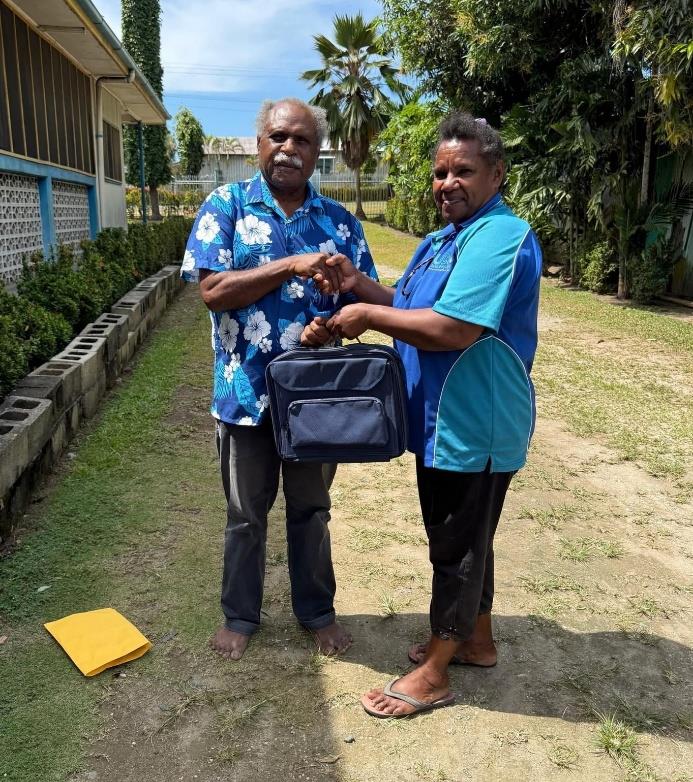
WEWAK, 20 July 2026 – United Christian Broadcasters (UCB) PNG, Laif FM, today received a filing cabinet from the Wewak Rotary Community Corp (WRCC) during a presentation held at the Laif FM Radio Station in Wewak.

The filing cabinet was officially presented by the President of the Wewak Rotary Community Corp, Mrs Anna Klawe, as part of the ongoing partnership and support between WRCC and UCB PNG Laif FM.

Receiving the donation on behalf of the station, Station Manager Mr Issac Fingu, together with the Laif FM staff, expressed their sincere appreciation to WRCC for its generous support. He said the filing cabinet would assist the station in improving the organisation and safekeeping of important office records and documents.

Mr Fingu acknowledged that strong partnerships such as this continue to strengthen community organisations and enable them to serve the people more effectively.

On behalf of the Board, Management, and Staff of United Christian Broadcasters PNG, Laif FM, heartfelt appreciation is also extended to Mr Phil Saxby from RAWCS/RARE Brisbane and Mr Albert Benfer from the Rotary Club of Cleveland D9620 Brisbane, Australia for their generous contribution of the filing cabinet and the shipment of the container.

“Your kindness and commitment to supporting our ministry are greatly appreciated. Your partnership is making a lasting impact on the work of Laif FM and the communities we serve.”

The presentation is another example of how collaboration and goodwill between organisations can create meaningful change and strengthen community development.

“It is through partnership that we can move boundaries in all aspects of life.

Two people, one in a blue shirt and one in a blue jacket, are standing outside a house with green grass and trees, holding a black bag and a yellow object.AI-generated content may be incorrect.

The Wewak Rotary Community Corps (WRCC) has continued its commitment to serving the community by also donating a brand-new laptop to the Senior Pastor of AOG Full Gospel Church, Regional Superintendent, and Vice National Superintendent of the Assemblies of God Papua New Guinea, Pastor Ivan Lesly. The presentation was made on Tuesday, 21 July 2026, by WRCC Secretary, Julie Korikoria, who said the donation reflects Rotary’s commitment to supporting community leaders whose work has a lasting impact. 


Receiving the laptop, Pastor Ivan Lesly expressed his heartfelt gratitude to the Wewak Rotary Community Corps, saying the donation had come at exactly the right time.


“This laptop has come just on time. My old laptop has been giving me many problems, and several of the keys were no longer functioning. This new laptop will greatly assist me in preparing PowerPoint presentations, typing important reports and documents, and carrying out my responsibilities as I travel throughout the country for National Executive Council (NEC) meetings and regional planning. It will help me continue to advance the work of God more effectively,” Pastor Lesly said.

Pastor Lesly sincerely thanked the Wewak Rotary Community Corps for recognising his need and making his ministry easier through this timely donation.
A special acknowledgment was also extended to Mr. Albert Benfer from the Rotary Club of Cleveland, under Rotary District 9620, Brisbane, Australia, as the major sponsor of the new laptop. His generous support, in partnership with the Wewak Rotary Community Corps, has enabled WRCC to continue reaching out to communities by equipping church leaders with essential tools to carry out their ministry more effectively.


The Wewak Rotary Community Corps believes that churches play a vital role in building peaceful and resilient communities. Through the ministry of the Gospel, churches are on the frontline of addressing social challenges, reducing law and order issues, strengthening families, and bringing hope to people.
WRCC remains committed to building strong partnerships with churches and community organisations as it continues to serve the people of East Sepik Province and Papua New Guinea through practical acts of kindness and community support.

Anna Klawe

President Wewak Rotary Community Corps

Tell Me Please

An old man looked at me and said, 

Can you tell me if it’s the Truth 

For many leaders have spoken words 

Not always words you can trust.

I took him by the hand and said,

As a Rotarian, It is my creed 

A test I will always live by 

In me You will find the Truth Indeed.


He smiled a gentle smile and asked 

Is it Fair to All concerned 

There are many others amongst us 

Who care not if they are called to speak. 

With my arm upon his shoulder 

I assured him, Yes, it is Fair 

As a Rotarian in this world 

You will find Fairness amongst us everywhere.


Ah, he said but will it build Goodwill 

And make better Friendships too

Look after those around who 

May be in need of your support 

I looked at him and gently smiled 

Rotarians are found in every sort 

They will always be your friends for life 

A friendship that cannot be bought.


So young man can I ask you 

Will it be Beneficial to All 

Is your Four-Way Test the one thing 

With empathy before we fall 

I stood firmly beside him 

I knew what I wanted to say 

Sir, I do my best in everything

The Four-Way Test we live every day.


With those few words that were spoken 

He left and went on his way 

At last, he had found a reason in life 

The Four-Way Test he would live each day.


Peter Morley 16/7/2026

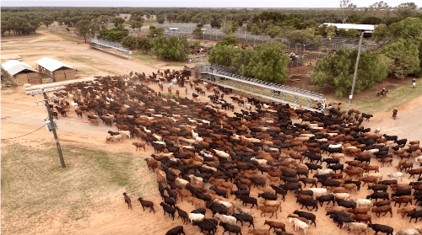
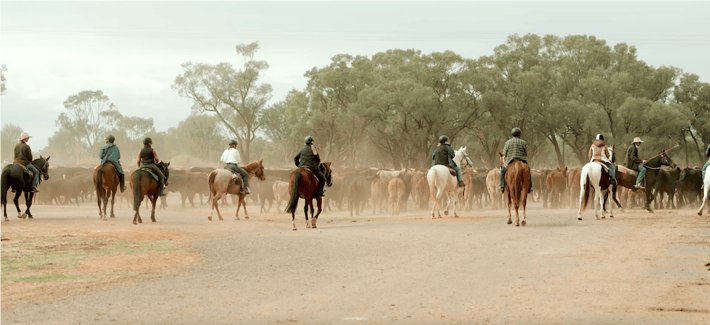
1,400 cattle over 445 km from Longreach to Blackall in about six weeks along the ‘long paddock” with up to a dozen rookie drovers who have little horseback experience.  What could possibly go wrong?

Thankfully not too much!   In the competent hands of our very experienced chief drover, Billy Prow, the fourteen hundred cattle (which we had borrowed!) arrived safely at the Blackall saleyards for fattening at various feedlots. 


The guest drovers sign up for an experience of a lifetime.   An early 5:00am start for a hearty breakfast of porridge and bacon and eggs sets the tone for the day whilst the horses are saddled and the cattle mustered.  There is a break in the middle of the day for watering the cattle and then a spot is selected for overnight – chosen, again, for the availability of water.  The pace is very relaxed, usually around 2km/hour with the cattle moving between ten and fifteen kilometres each day.  The day ends around a campfire with an excellent camp oven meal cooked on the embers of the campfire and everyone recapping the stories of the day, sprouting yarns and tall tales and reciting bush poetry.   It is not a late night!   Most are in bed by 7:30 pm although there is also a fair demand for the somewhat rudimentary but effective showers – especially from the women of the trail.


The second Great Australian Cattle Drive is an initiative of BeefBank, a registered charity wholly owned by the Rotary Club of Brisbane Centenary.  Last year we travelled from Longreach to Roma but the three months it took was far too long – hence the shorter route this year.


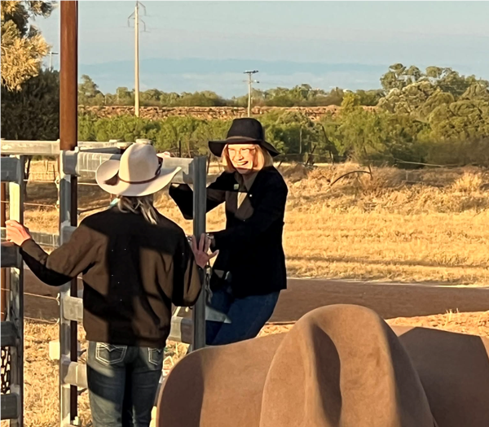
Starting again at Longreach we were farewelled by the Governor, Dr Jeannette Young, who happily swung on a farm gate to wave us off. (photo on right) The drive, through Muttaburra, Aramac, Ilfracombe, Barcaldine and Blackall along the old stock routes, took our drive through some of the most beautiful western country which after two years of good rain, was looking the best it had done for many years.   Certainly, the cattle enjoyed munching on the grass!   Collectively, the cattle walked at least 40,000 kms…some much more!


Of course, the reason for the cattle drive was not to have a lovely wander through the bush!  The purpose is twofold.  Firstly, to promote the fact of food insecurity with one in five families being affected.  The more important purpose is to raise funds for BeefBank to continue to supply meat protein to Foodbank and to FareShare who then pass it on to the numerous aid agencies dealing with those in very real need.    Foodbank and FareShare are able to access most food products but the one thing that they do not get is red meat and this is where BeefBank come in.  Over the past ten years or so, we estimate that BeefBank has provided between one million and one and a half million meals of meat.    Our five-year aim is to provide one million meals each year.  To do that we need around four hundred cattle which we then process into mince, stewing steak and so forth…no point in producing steaks!

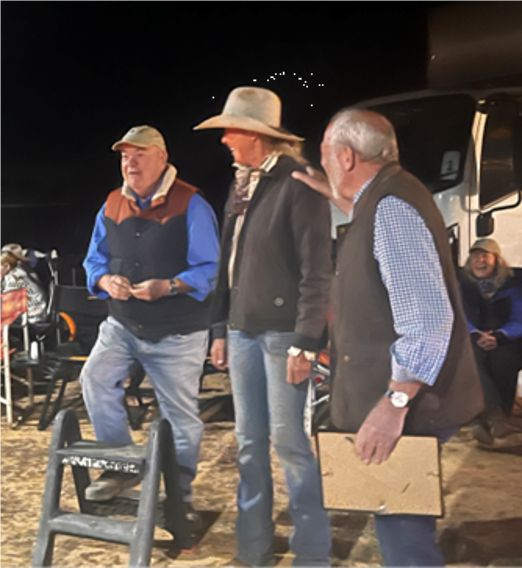
Craig Carson and Nick Curry present Chrissie Nott, our Chief Cattle Drive coordinator, with a PHF.   Craig needed the step ladder!


Ultimately, the Drive was an unqualified success.  We made money and we raised awareness, but more than that, we brought tourists to the region, and we spent money in the local towns.  We celebrated (if that’s the right word) each of the three State of Origin games in the local pubs and held a number of other functions along the way.  And, importantly, everyone had a great time and really enjoyed themselves.  What could be better than that!


PDG Nick Curry

RC of Brisbane Centenary

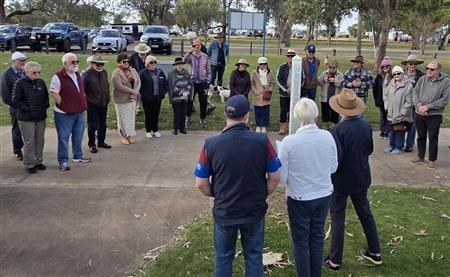
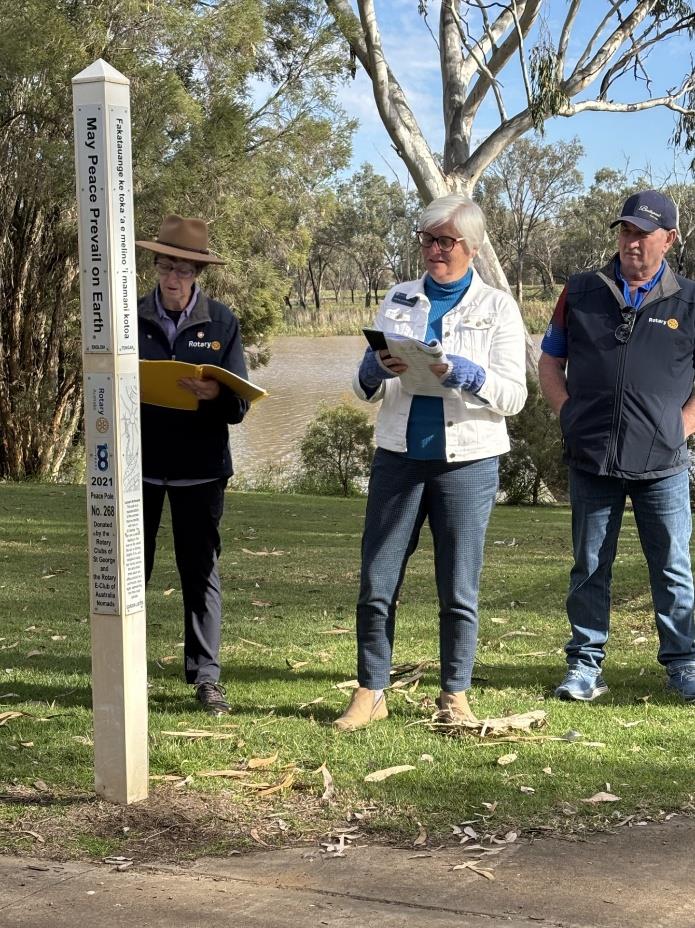
In June 2026 members of the       Rotary E-Club of Australia Nomads joined members of the Rotary Club of St George (District 9620) in St George’s Rotary Park for a re-affirmation ceremony at the Peace Pole that the two clubs co-sponsored three years previously in 2023. The ceremony was led by Vicki Dorgelo, 2025-26 President of the Rotary E-Club of Australia Nomads, and Win Salmon, 2025-26 President of the Rotary Club of St George, assisted by Rob Curtis, whose initial idea it was to install Peace Poles in St George. 

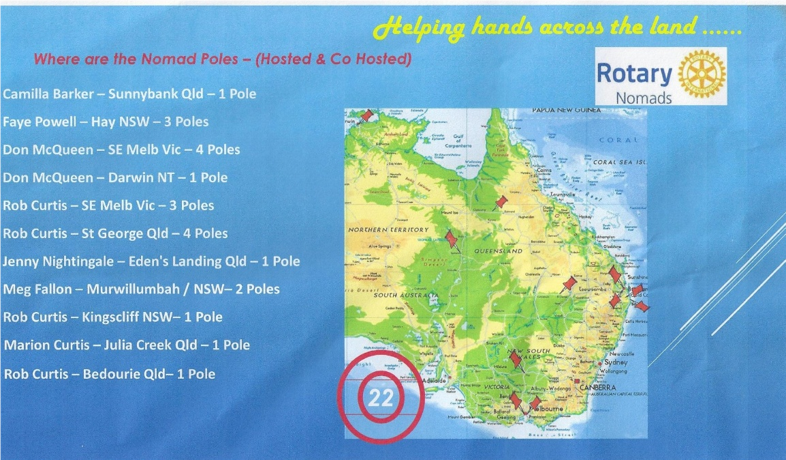
Hosted & Co HostedAI-generated content may be incorrect.

To mark the Centenary of Rotary in Australia, the Rotary Club of Canberra Burley Griffin, ACT, set a goal to see 100 Peace Poles donated to 100 Schools to recognise 100 years of Rotary service in Australia in 2021. This goal has been achieved through collaboration with schools, organisations and Rotary clubs around Australia and today there are approximately 1 000 Rotary Peace Poles in every state and territory of Australia. 22 of these have been sponsored or co-sponsored by the Rotary E-Club of Australia Nomads. 

The Rotary E-Club of Australia Nomads’ involvement in the Peace Pole Project began in April 2021 when member, Camilla Barker, was instrumental in the placing of a Peace Pole in the grounds at St Thomas More College, Sunnybank. This was followed by the placement of 21 further poles in New South Wales, Northern Territory, Victoria and Queensland (see list on the map at right).

St George’s four Peace Poles were co-sponsored by the Rotary Club of St George and the Rotary E-Club of Australia Nomads. For the first time a sizeable number of Rotarians from both Clubs was present for the re-affirmation. Rotary Nomads were in St George to celebrate their week-long annual changeover. They were joined by the District Governor, Mark Williams, Area Governor, Bob Minchin and Rob Curtis, Rotarian Coordinator Queensland Rotary 100 Peace Pole Project, as well as by members of several other Rotary Clubs in District 9620 and a representative of the Balonne Shire Council.

The suggestion to install Peace Poles in St George was given to the RC of St George in 2021 by Rob Curtis. Members agreed that the Club would install four Peace poles in St George – one each at the three local schools and the fourth at Rotary Park on the bank of the Balonne River. The process involved liaising with each of the three schools, the Balonne Shire Council and the indigenous community through their Elders and Gordon Lister, the artist whose work appears on the poles.

This co-operation between the two Rotary clubs, the local schools, and the local community symbolises Rotary’s desire to promote peace and unity. The pole in St George’s Rotary Park (number 268) reminds all who pass by (whether members of the St George community or visitors to our town) that, “If there is to be peace in the world, there must be peace between nations. If there is to be peace between nations, there must be peace in the cities. If there is to be peace in the cities, there must be peace between neighbours. If there is to be peace between neighbours, there must be peace in the home. If there is to be peace in the home, there must be peace in the heart.” (From the re-affirmation ceremony)

PP Win Salmon

Rotary Club of St George

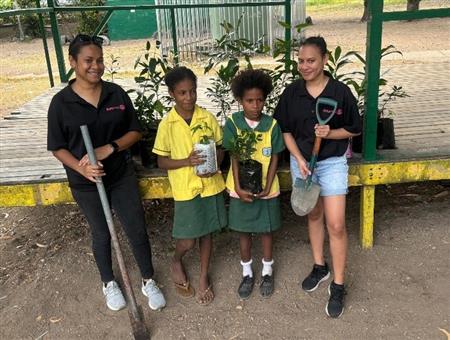
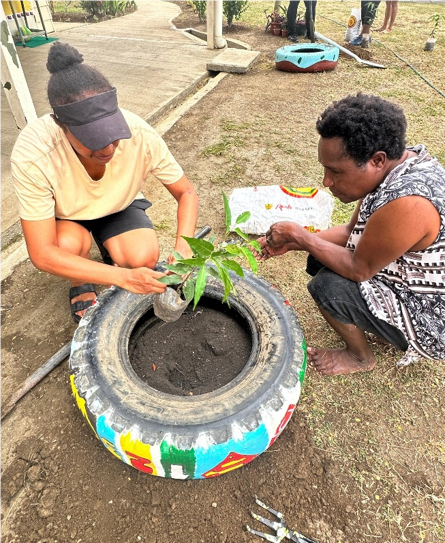
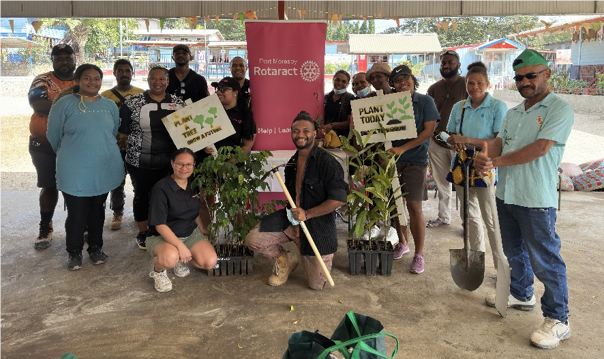
Over the past three years, the Rotaract Club of Port Moresby has proudly continued its Tree Planting Project, a legacy initiative that reflects our commitment to environmental sustainability and community service. With an ambitious goal of planting 1,000 trees across Papua New Guinea, this project has become a meaningful way for our members to make a lasting impact while encouraging environmental stewardship among young people.


Since the project began, our club has successfully planted a total of 100 trees across three schools: 30 trees at Taurama Primary School, 30 trees at Edai Primary School, and 40 trees at Sacred Heart International School. Each planting activity has brought together Rotaract members, teachers, students, and community partners, demonstrating what can be achieved when people unite behind a shared purpose.

Tree planting, Edai Primary School


Beyond increasing green spaces, the project has provided valuable opportunities to educate students about the importance of caring for the environment and the role each of us plays in protecting it for future generations. Every tree planted represents hope for a healthier, greener future and serves as a reminder that even small actions can create lasting change over time.


This initiative would not have been possible without the dedication of our club members and the generous support of our partners, including Soroptimist International Port Moresby and TotalEnergies PNG. Their continued encouragement and contribution     helped us expand the reach and impact of this project. 

As we continue working towards our goal of planting 1,000 trees, we remain committed to building strong community partnerships, inspiring environmental responsibility, and creating opportunities for more people to become involved. While there is still much work to do, we are proud of the progress we have made and look forward to seeing this legacy continue to grow.

Together, we are planting more than just trees – we are planting hope, strengthening communities, and investing in a greener future for our little learners in Papua New Guinea.

Sacred Heart International School planting


Alexander Tsiperau

Public Relations Co-Director

                    Rotaract Club of Port Moresby

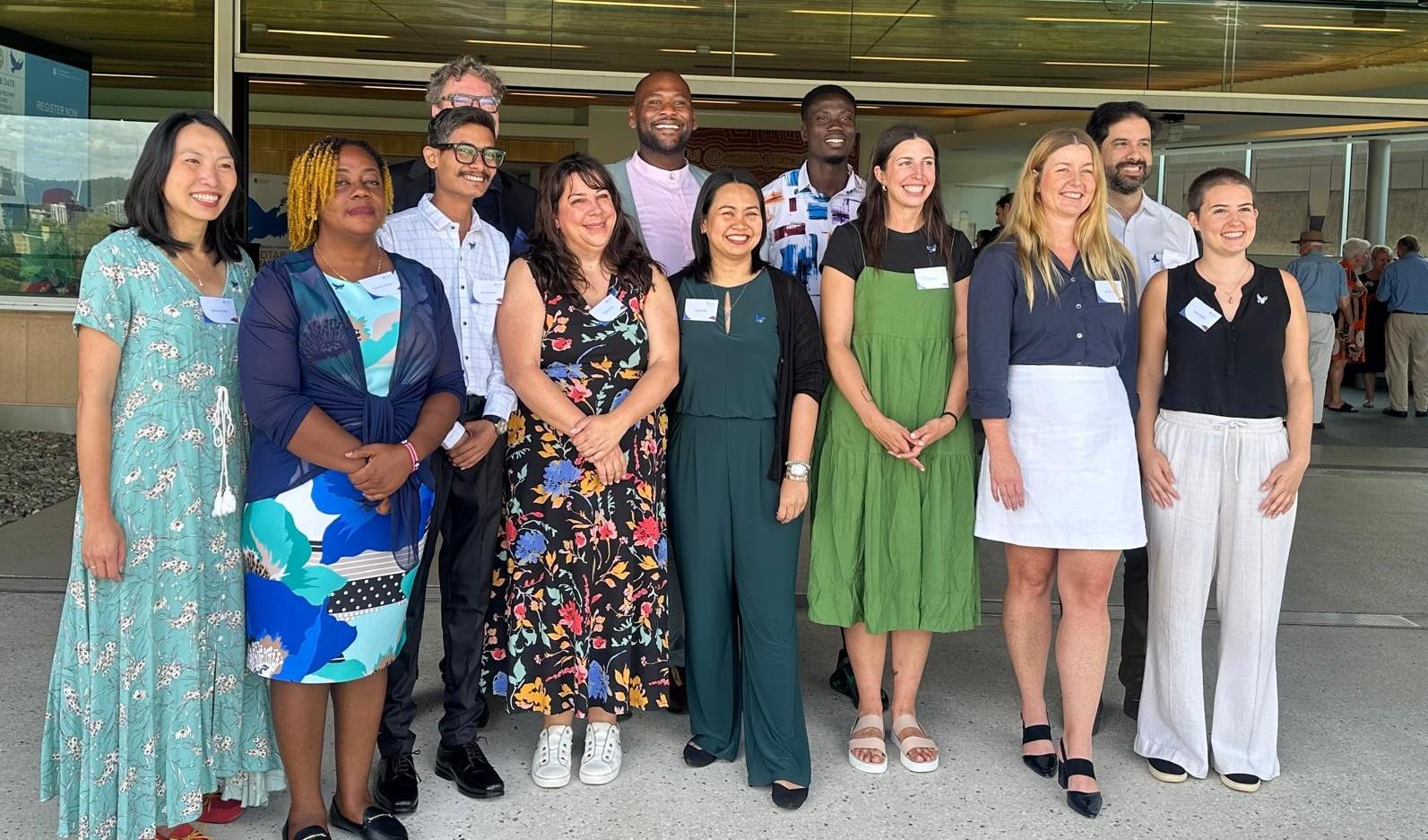
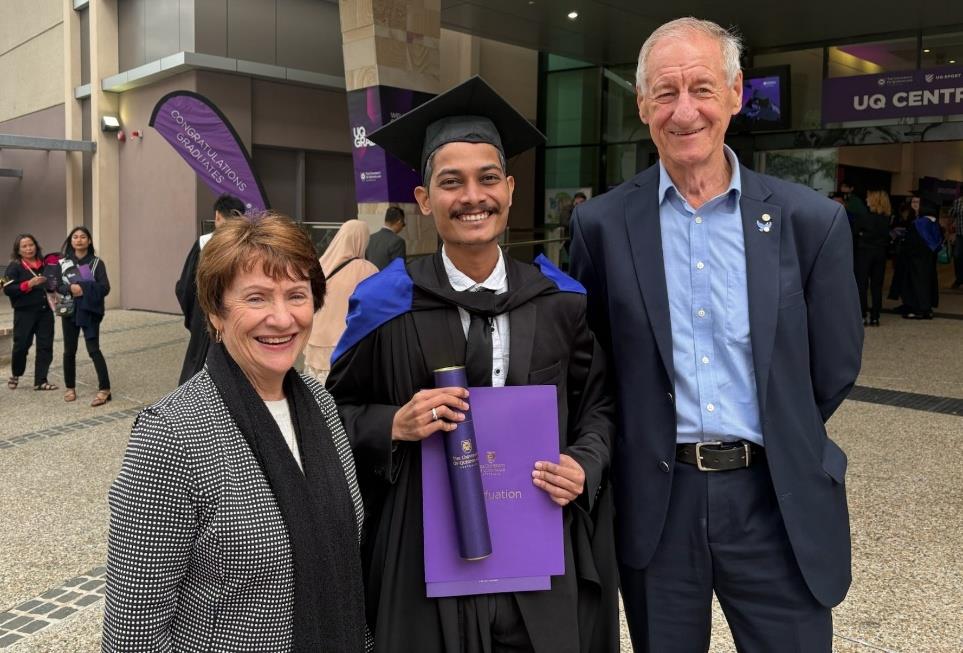
The Class 23 of Peace Fellows graduated from University of Queensland on 16 July 2026. Past Host Area Coordinator, Leslie Smith and I attended the Graduation Ceremony, together with other Peace Fellow Counsellors.

The image depicts a group of people standing together in front of a glass building, wearing various colorful and patterned clothing, with some holding small signs or badges.AI-generated content may be incorrect.The ten Peace Fellows completing their studies were:

Camilo Arango Osorno – Colombia   Camilo’s area of interest involves transitional justice systems, private sector accountability in peace processes, democratic institutional and the prevention of structural and cyclical violence.

Samantha Murray – Canada   Sam’s area of interest is Human Rights and Indigenous-settler relationships. Sam looks forward to continuing to advocate for human rights for all.

Thristina Kanka – Unites States  Thristina’s long-term goal is to work in communities as a bridge builder to further cross-understanding and growth and has a career focussed on grassroots empowerment, gender equality and intercultural engagement.A graduate is holding a diploma and being congratulated by others in a university setting.AI-generated content may be incorrect.

Kathleen Novella – Canada/Indonesia   Kathleen’s area of interest is Food Security, Human Rights, gender and sustainable economic development. The future plans include fields such as mediation, restorative justice and anti-human trafficking initiatives.

Patmillia Doe Paivey – Liberia  Patmillia’s area of interest is focussed on post-conflict policy development and research, with specialisation in youth-led peace building, feminism and civic engagement strategies across Africa, with a belief that Liberia’s peace depends upon rebuilding public trust in justice institutions and embedding principles of care and dialogue.

Lorena Wendel – Brazil  Lorena’s interest is in the area of Regional Cooperation in Latin America and plans to return to Latin America to work with local organisations that are focussed on strengthening regional cooperation for enhancing social development and quality of life for all peoples.

Salim Uqdar – United States  Salim’s area of interest is dispute resolution, dispute system design and organisational change. His entire path has been guided by a single, powerful question “How can we create a more conflict-literate world utilising peace processes and conflict resolution methods within the private sector?”

Pravin Subhash Wanhhede – India   Pravin’s area of interest is the empowerment of youth and traditional conflict resolution practices in indigenous communities and aspires to connect grassroots wisdom with global peacebuilding frameworks to design transformative, culturally grounded interventions that prevent conflict.

Emannuel Kodha – Ghana   Emannuel has a strong academic background, field experience and an unwavering passion for peace and is eager and poised to be a leading voice in the future of conflict resolution and sustainable peace development in both Ghana and beyond.

Khrisna Avila – Philippines  Khrisna’s area of interest is Human Trafficking, Online Child sexual abuse and exploitation and cyber scam slavery and is eager to deepen her understanding of the evolving dynamics of terrorism and violent extremism in the Philippines and the broader Asia-Pacific region.

An excellent cohort of Rotary Peace Fellows.

Leslie Smith, Immediate Past Host Area Coordinator, Pravin Wankhede, newly graduated Rotary Peace Fellow and PDG Eric Wood, Rotary Host Area Coordinator 

PDG Eric A. Wood, Host Area Coordinator 2025-2028

Why Am I a Rotarian?

As many of you are aware, I have had a long and continuous involvement with the Rotary family since 1970—spanning Interact, Rotaract, and Rotary itself.

Throughout my life, I have grown to deeply appreciate the vital role that the Third Sector plays in meeting community needs, whether local, national, or international. Lying outside the Government and Private sectors, this Civil Society comprises the voluntary civic and social organisations that form the bedrock of a functioning democracy, bridging gaps between individual citizens, businesses, and state institutions.

I suggest that the development of modern civil society has been a direct reaction to the consequences of absolute power over the centuries—a reflection of the eternal tension between the power of love versus the love of power.

At its core, civil society is driven by human empathy responding to unmet needs. Reflecting on this, I recall a classic insight attributed to anthropologist Margaret Mead. When asked what marked the first sign of human civilisation, she pointed to a 30,000-year-old human skeleton with a healed femur. In the animal world, a broken leg meant certain death. A healed femur meant someone took the time to care, share food and water, and offer protection. Similarly, another milestone of civilisation would be when women first gathered as midwives to care for one another during the birthing process.

Empathy is where service begins, but as Rotary International’s vision reminds us, our goal isn't just temporary relief—it is to Create Lasting Impact.  Empathy becomes impact when it is organised, sustained, and shared. Impact becomes lasting when it builds capacity, strengthens institutions, and empowers communities to thrive independently.

Within this framework, Rotary International stands as one of the world's most enduring global civil society organisations. Since 1905, Rotary has exemplified how organised, values-driven participation can address challenges that states and markets often fail to resolve on their own.

The relationship between civil society and Rotary is deeply reciprocal, rooted in the concepts of social capital, local autonomy, and grassroots trust. 

Rotary members volunteer approximately millions of hours annually, translating to hundreds of millions of dollars in community service value. This massive mobilisation of human capital strengthens civil society by fostering a culture of active citizenship and mutual aid. 

Rather than acting as a top-down bureaucracy, Rotary operates through more than 45,000 autonomous, localised clubs. This structure allows citizens to directly identify the specific needs of their communities—whether funding local literacy programs, cleaning up environmental spaces, or supporting maternal health—thereby revitalising civic engagement from the ground up. 

Beyond local community service, Rotary elevates civil society into the realm of global policy, peacebuilding, and sustainable development. 

This intersection of local execution and global reach is most vividly demonstrated in Rotary’s flagship humanitarian effort: the campaign to eradicate polio. Working alongside governments and global bodies like the World Health Organisation and UNICEF, Rotary's civil society network has contributed billions of dollars and countless volunteer hours to reduce polio cases by over 99.9% globally. 

In times of deep geopolitical friction, Rotary’s non-political, non-religious stance provides a neutral platform where trust can be built across deep cultural and ideological divides. When official diplomatic ties between nations are strained, transnational civic networks like Rotary remain open, facilitating citizen-led diplomacy and international goodwill. 

Ultimately, the relationship between civil society and Rotary underscores the vital truth that addressing modern challenges requires more than state action or commercial enterprise alone. By transforming professional networks into engines for humanitarian service, Rotary acts as a living laboratory for 21st-century civic leadership. It reinforces civil society by empowering everyday citizens to become "people of action," proving that localised, collaborative volunteerism remains a powerful force for global progress and structural resilience. 

When we combine grassroots empathy with strategic action, we don't just solve immediate problems; we create lasting impact — in ourselves, in our communities and in the world.

This is why I am a Rotarian.

Rotary News from Around the World
Blood brothers
After the loss of a friend, a Rotarian in Texas made it his mission to become a regular blood donor.
A conversation between friends
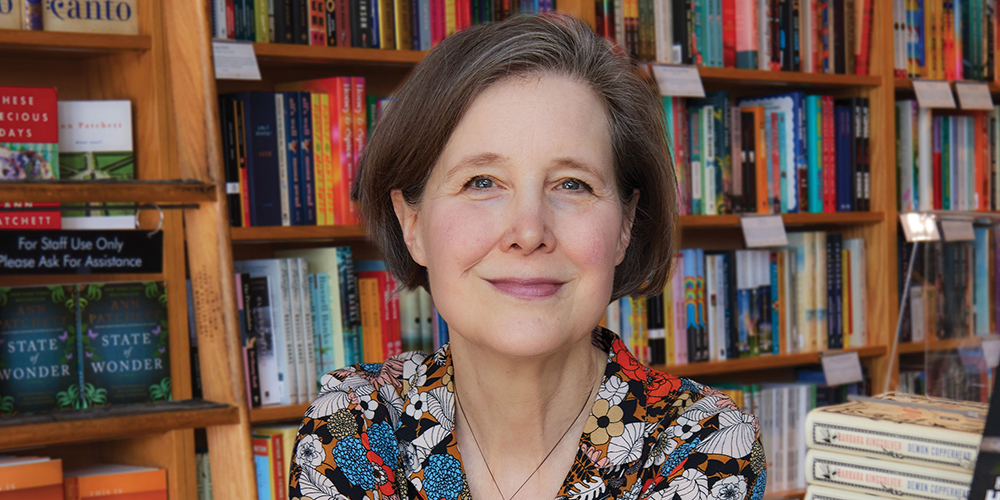
NPR’s Scott Simon talks with the writer Ann Patchett about her latest novel, books and bookstores, and her father’s poignant relationship with Rotary
Rotaractors ready to lead
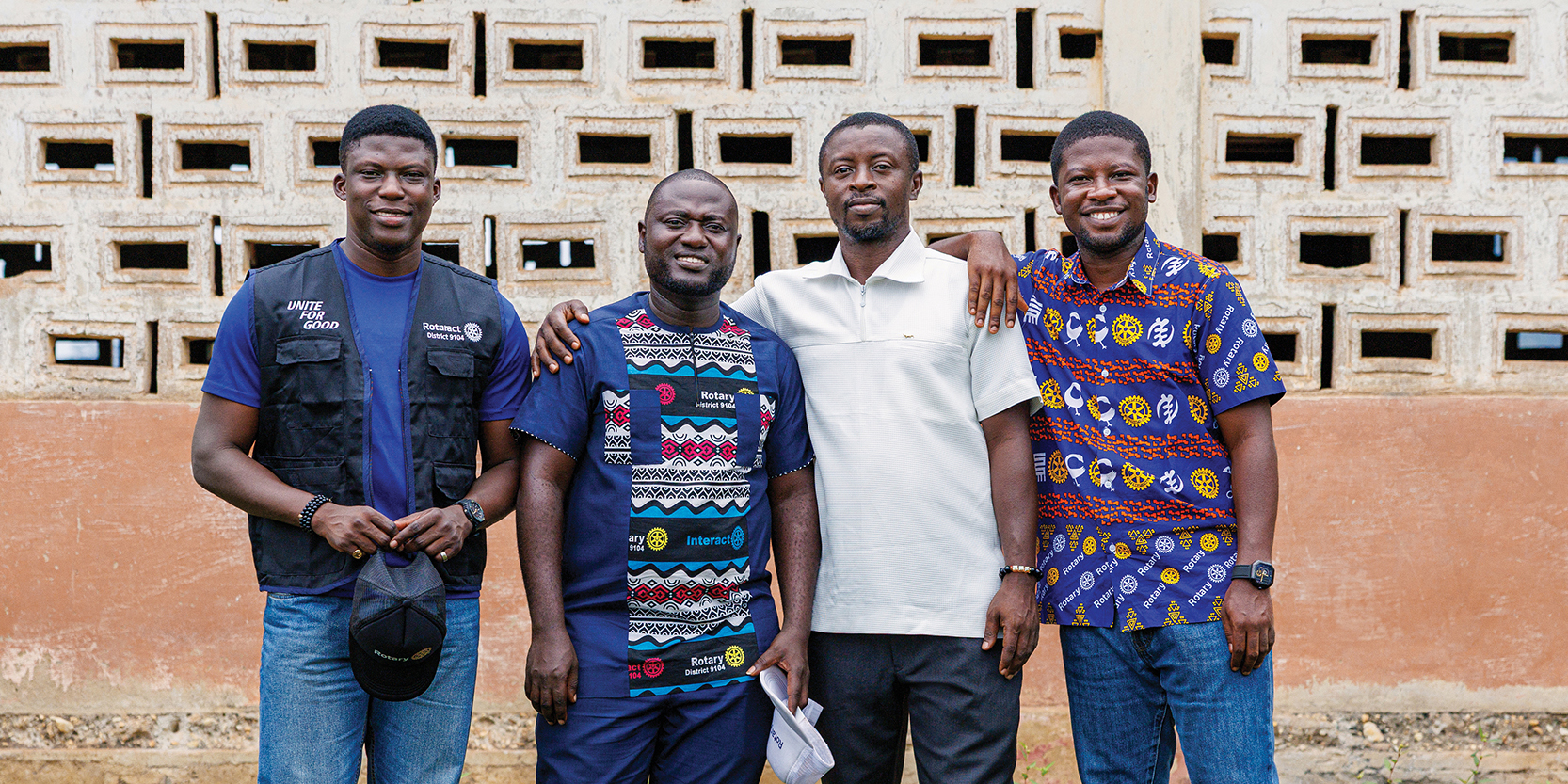
Newly eligible to seek global grants, Rotaractors are showing they can bring fresh ideas to large international projects
Museum worthy
From the iron lung to gene sequencing, a new Rotarian learns about polio’s scientific legacy.

Our District's Sponsors

Subscribe to our weekly e-bulletin "The GIST"
Subscribe to our eBulletin and stay up to date on the latest news and events.

Upcoming Events